Japan produces some of the most celebrated teas in the world. From the vivid green powder of matcha to the delicate needle-shaped leaves of gyokuro, Japanese tea is a culture unto itself — one that has shaped meditation practices, art, architecture, and daily life for over a thousand years.
If you are new to Japanese tea, or simply curious about what separates a £5 supermarket matcha from a £40 ceremonial grade tin, this guide will walk you through everything you need to know.
Shop Japanese Organic Matcha on Amazon — the bestselling everyday matcha
A brief history of Japanese tea
Tea arrived in Japan from China in the 9th century, brought by Buddhist monks who used it to stay alert during long meditation sessions. By the 12th century, the monk Eisai had introduced powdered tea — the precursor to matcha — and written the first Japanese book on tea. The formal tea ceremony (chado, or the way of tea) developed over the following centuries, and its philosophy of wabi-cha (rustic simplicity) still defines the aesthetic of Japanese tea culture today.
The main types of Japanese green tea
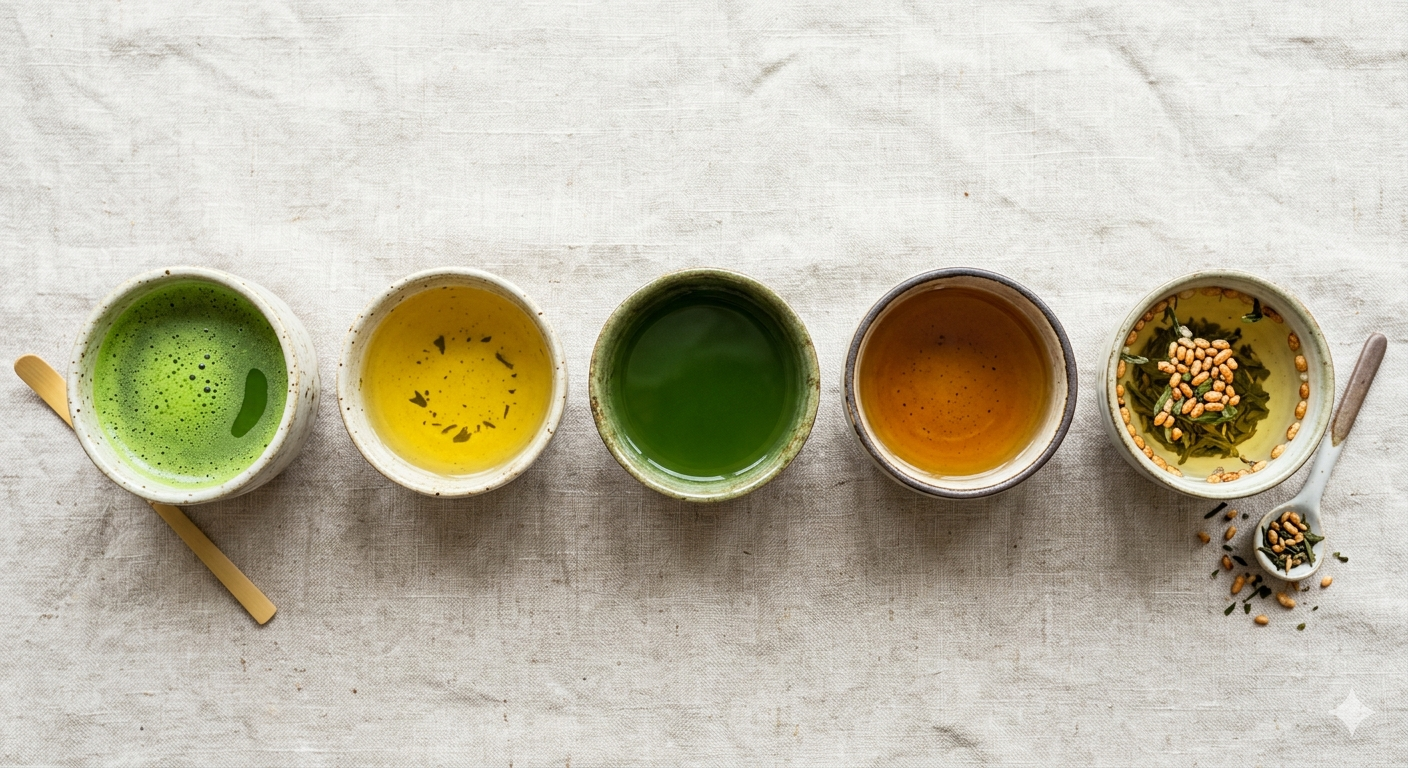
Matcha is the most internationally recognised Japanese tea. Made from shade-grown tencha leaves ground into a fine powder, it is whisked directly into hot water rather than steeped. Matcha has a rich, umami-forward flavour with natural sweetness and a vivid green colour. It is used in tea ceremonies, lattes, baking, and smoothies.
Sencha is Japan’s everyday green tea — steamed, rolled, and dried. It produces a clear golden-green liquor with a fresh, grassy flavour and mild astringency. Sencha accounts for around 70% of Japanese tea production and is the tea most Japanese people drink daily.
Gyokuro is Japan’s most prestigious loose leaf tea. Like matcha, the plants are shade-grown before harvest, which increases chlorophyll and amino acid content. The result is an intensely sweet, deeply umami cup with very low bitterness.
Hojicha is roasted green tea with a warm, toasty, caramel-like flavour. The roasting process reduces caffeine significantly, making it popular as an evening drink.
Genmaicha is sencha blended with roasted brown rice, giving it a nutty, popcorn-like character. It is approachable, affordable, and surprisingly satisfying.
How does Japanese tea differ from Chinese or Korean tea?
Japanese green teas are steamed immediately after picking to halt oxidation, preserving their vivid green colour and fresh, vegetal flavour. Chinese green teas are typically pan-fired, producing a drier, nuttier character. Korean green teas can use either method but tend towards a lighter, more delicate style.
Where to start
If you are trying Japanese tea for the first time, start with a good quality organic matcha. It is versatile, easy to prepare, and immediately shows you what makes Japanese tea special.
Shop Japanese Organic Matcha on Amazon — perfect first Japanese tea
Shop Japanese Sencha Loose Leaf on Amazon — Japan’s everyday green tea
Shop Gyokuro on Amazon — Japan’s most prestigious green tea