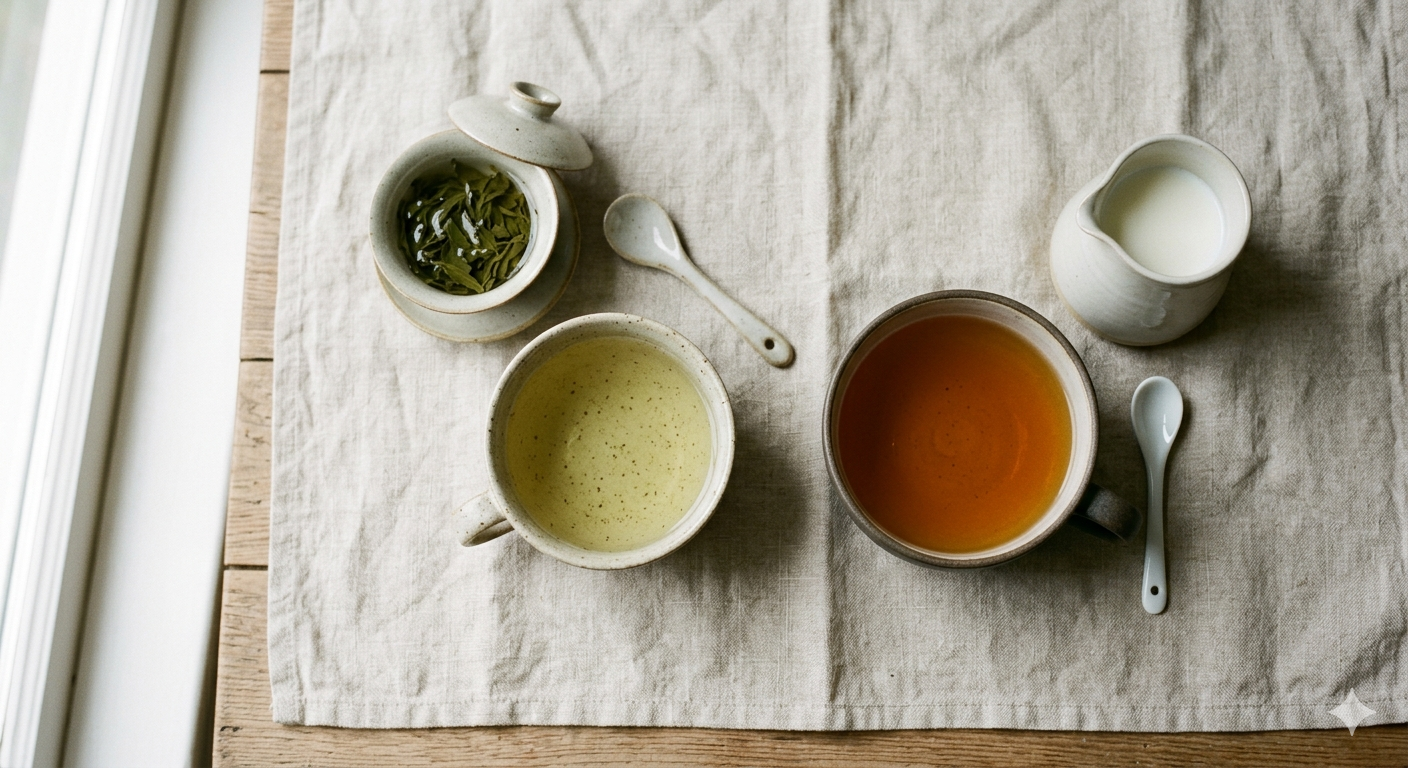
You start your morning. The kettle boils. But which tea do you reach for?
For many people in Korea, the answer has traditionally been nokcha, a delicate green tea brewed at a low temperature, sipped slowly, and appreciated for its grassy sweetness. But increasingly, mugicha (barley tea), boricha, and now English Breakfast Tea are making their way into Korean kitchens and cafes.
So what exactly separates Korean tea from English Breakfast Tea?
The basics: what is English Breakfast Tea?
English Breakfast Tea is a blend of black teas, most commonly from Assam (India), Ceylon (Sri Lanka), and Kenya. It is strong, malty, and traditionally served with milk and sugar. Brands like Twinings and Yorkshire Tea have been making their own versions for generations.
Shop Twinings English Breakfast Tea on Amazon — Best seller, excellent starter choice
Shop Yorkshire Tea on Amazon — UK’s number one selling tea
The basics: what is Korean tea?
Korean tea (hanguk cha) encompasses a wide range of drinks made from plants, grains, and fruits. The most famous is green tea (nokcha) from the Boseong region in South Jeolla Province. Others include:
- Omija-cha: naturally sweet and sour
- Barley tea (boricha): roasted and nutty, often drunk cold
- Chrysanthemum tea: floral and calming
- Ssanghwa-cha: a dark, herbal medicinal tea
Taste comparison
English Breakfast Tea is bold and malty with a slight astringency. When brewed strong and paired with milk, it becomes creamy and full-bodied. Korean green tea (nokcha) is almost the opposite: light, vegetal, and slightly sweet. If English Breakfast Tea is a strong handshake, Korean green tea is a quiet bow.
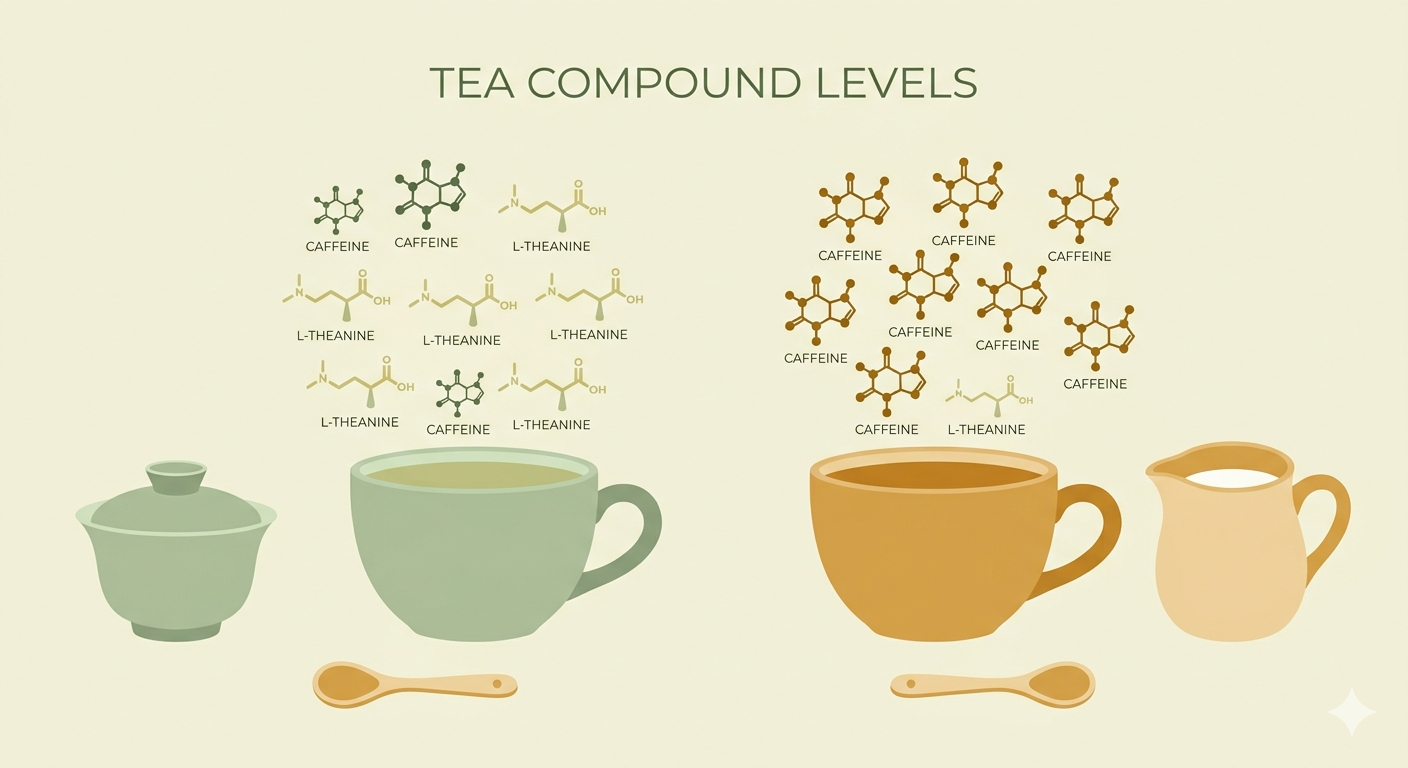
Caffeine: who wins?
English Breakfast Tea contains roughly 40–70mg of caffeine per cup, comparable to a weak espresso. Korean green tea contains approximately 25–35mg per cup, combined with L-theanine, which promotes calm focus without the jittery crash.
Brewing method
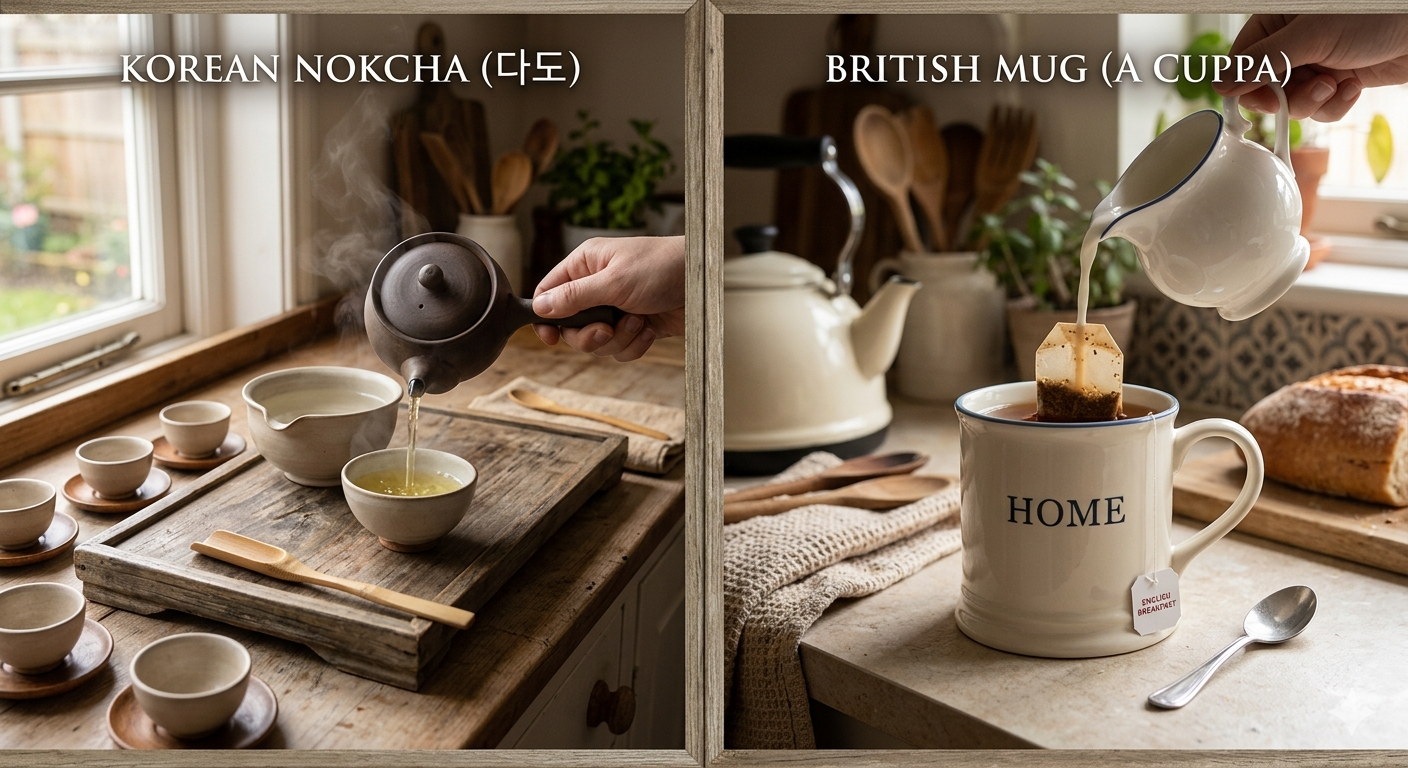
English Breakfast Tea: boiling water (100°C), steep for 3 to 5 minutes, add milk to taste. Korean green tea: cooler water (70–80°C) to avoid bitterness, steep for 1 to 2 minutes, no milk.
Which should you try?
The honest answer is: both. English Breakfast Tea is your get-up-and-go companion. Korean tea is your pause-and-breathe moment.
Try Twinings English Breakfast Tea — Good for beginners
Try Yorkshire Tea — Best for a strong, authentic cup